
The Workshop Way is a series of white papers, research reports, and reflections that articulate the “why” behind the way we approach our work.
Prepared by: Brian Schermer, Ph.D., AIA, Director of Research, Workshop Architects
Spaces that Spark Imagination: How Indoor Environments Support Creative Thinking for Higher Education
A Research-Informed Guide for Campus Planners and Designers
Universities are not just centers of knowledge transmission—they are incubators of imagination, innovation, and creative thinking. From lounges to laboratories, the spaces where learning occurs have a profound effect on how well students, faculty, and staff are able to think new thoughts and solve complex problems. While creativity can be difficult to measure, a growing body of research helps clarify how specific indoor environmental features support different types of creative thinking.
This white paper summarizes key findings from a 2025 systematic review co-authored by Brian Schermer (Director of Design Research at Workshop Architects) exploring how indoor environments support creativity. It applies those insights to five key campus settings: libraries, student centers, classrooms, laboratories, and studios.
What the Research Says
The review analyzed 46 experiments across 34 empirical studies, revealing the following takeaways:
· No one-size-fits-all solution: Different environments support different types of creative thinking.
· Idea generation (divergent thinking) thrives in flexible, relaxed, and stimulating settings.
· Focused problem-solving (convergent thinking) benefits from structure, clarity, and low-distraction settings.
· Most spaces can't support both modes at once—so campuses need variety or flexibility.
· Effective design balances natural elements, lighting, acoustics, furniture, layout, and user control.
One especially powerful insight from the research is that creativity thrives in community. Spaces that spark creative encounters and allow people to get into a rhythm of thinking—whether through chance conversations or purposeful collaboration—are just as important as light or furniture.
Academic Settings and Supportive Indoor Environments
1. Libraries
Use: Quiet study, research, reading, and collaborative
Creativity role: Often supports problem-solving and deep reflection.
Supportive features:
Natural light and views to reduce fatigue and improve mood
Zoned acoustics:
Quiet zones for deep focus
Low-level ambient zones (e.g., whisper-level) for light ideation
Flexible seating: Lounge chairs and carrels, offering lean forward and lean back options for comfort and autonomy
Writable surfaces in collaborative spaces
Adjustable task lighting, ventilation, and privacy screens
Design tip: Provide a mix of spaces that support both deep focus and thoughtful idea development.
2. Student Centers
Use: Socializing, events, dining, student organizations, casual study
Creativity role: A hub for social creativity and idea sharing across disciplines and interests.
Supportive features:
Biophilic design: plants, natural finishes, and daylight
Café-style background hum for relaxed energy
Movable furniture for spontaneous gathering and idea sharing
Bright colors, art, and displays to inspire playfulness and creative expression
Nooks and niches for informal conversations
Writable walls in lounges and meeting spaces
Design tip: Foster creativity by creating inviting spaces where students want to hang out, linger, and interact.
3. Classrooms
Uses: Teaching, discussion, group work
Creativity role: Supports both structured problem-solving and open discussion
Supportive features:
Flexible layouts: movable furniture and adaptable teaching zones
Natural and dimmable lighting
Good acoustics: clear speech, low reverberation
Writable walls or boards for capturing ideas
Warm materials and subtle color and texture variation to avoid monotony
Design tip: Reduce rigidity—enable students to move, speak, draw, and physically engage with content.
4. Laboratories
Uses: Scientific experimentation, group research, testing ideas
Creativity role: Primarily supports focused problems, but also sparks insight from tinkering and iteration
Supportive features:
Bright task lighting for precision work
Ergonomic, adjustable benches and stools
Clean, organized layout to reduce visual distractions
Collaboration corners with whiteboards or screens
Access to daylight or exterior views to reduce fatigue
Design tip: While safety and order are priorities, nearby informal collaboration zones can enhance insight and creative breakthroughs.
5. Studios Art, Design, Architecture
Use: Creative production, critique, collaboration, iteration
Creativity role: Heavy emphasis on idea generation, synthesis, and experimentation
Supportive features:
High ceilings and abundant daylight
Large tables and surfaces for making and spreading out work
Writable walls and pin-up areas for critique and iteration
Open plans with some movable partitions for flexibility
Mild background noise to support ideation
User control over lighting, display surfaces, and layout
Design tip: Embrace messiness and flexibility. Studios should signal freedom to experiment--test reflect, revise, and discover.
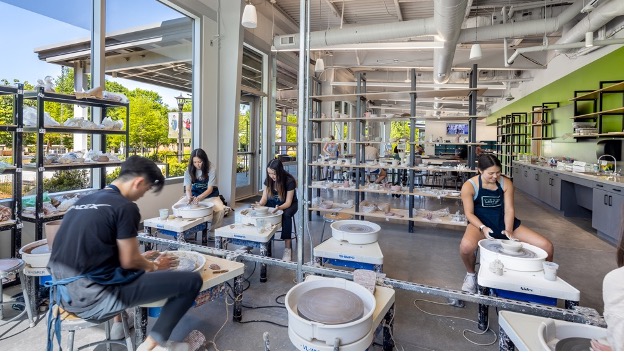
Transparency and Invitation: Georgia Tech’s Paper & Clay ceramics studio invites creative encounters through its open layout, natural light, and visibility from outside. The ability to see in—and out—creates a sense of invitation and engagement, supporting peer learning and hands-on exploration.
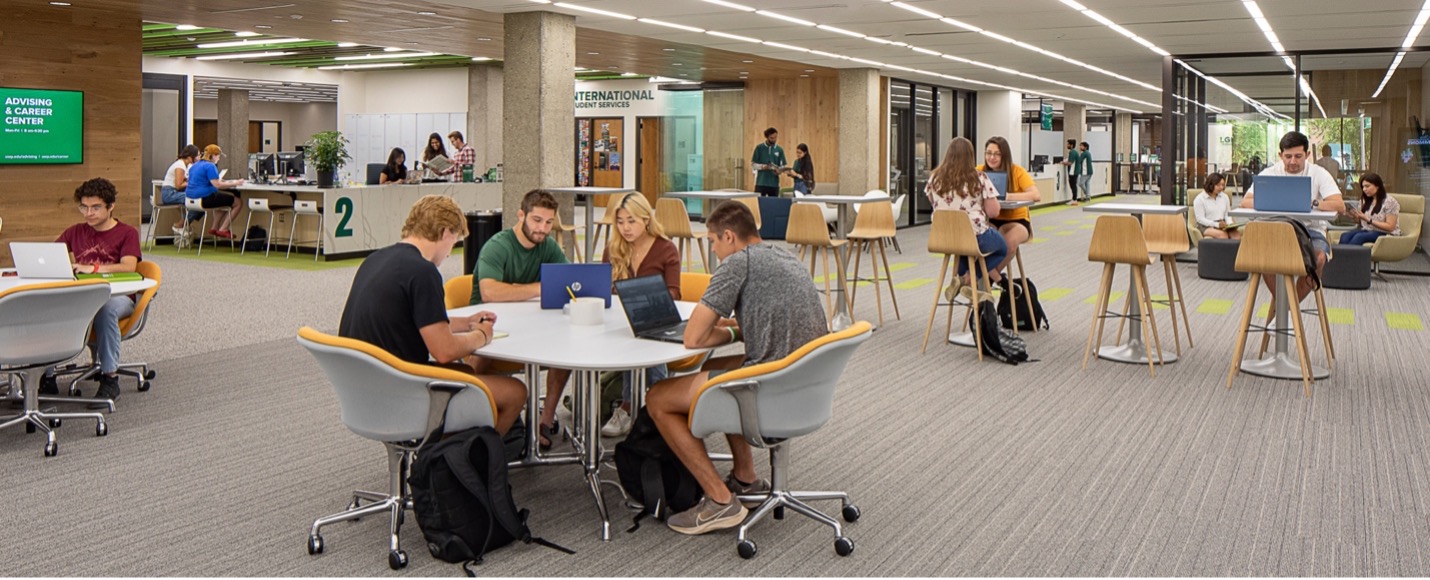
Seating Choice: UW–Parkside’s Callahan Commons blends study areas with lounge zones. A range of seating—from nooks to open lounges—plus flexible layouts and enclosed study rooms give students autonomy in how they work and connect.
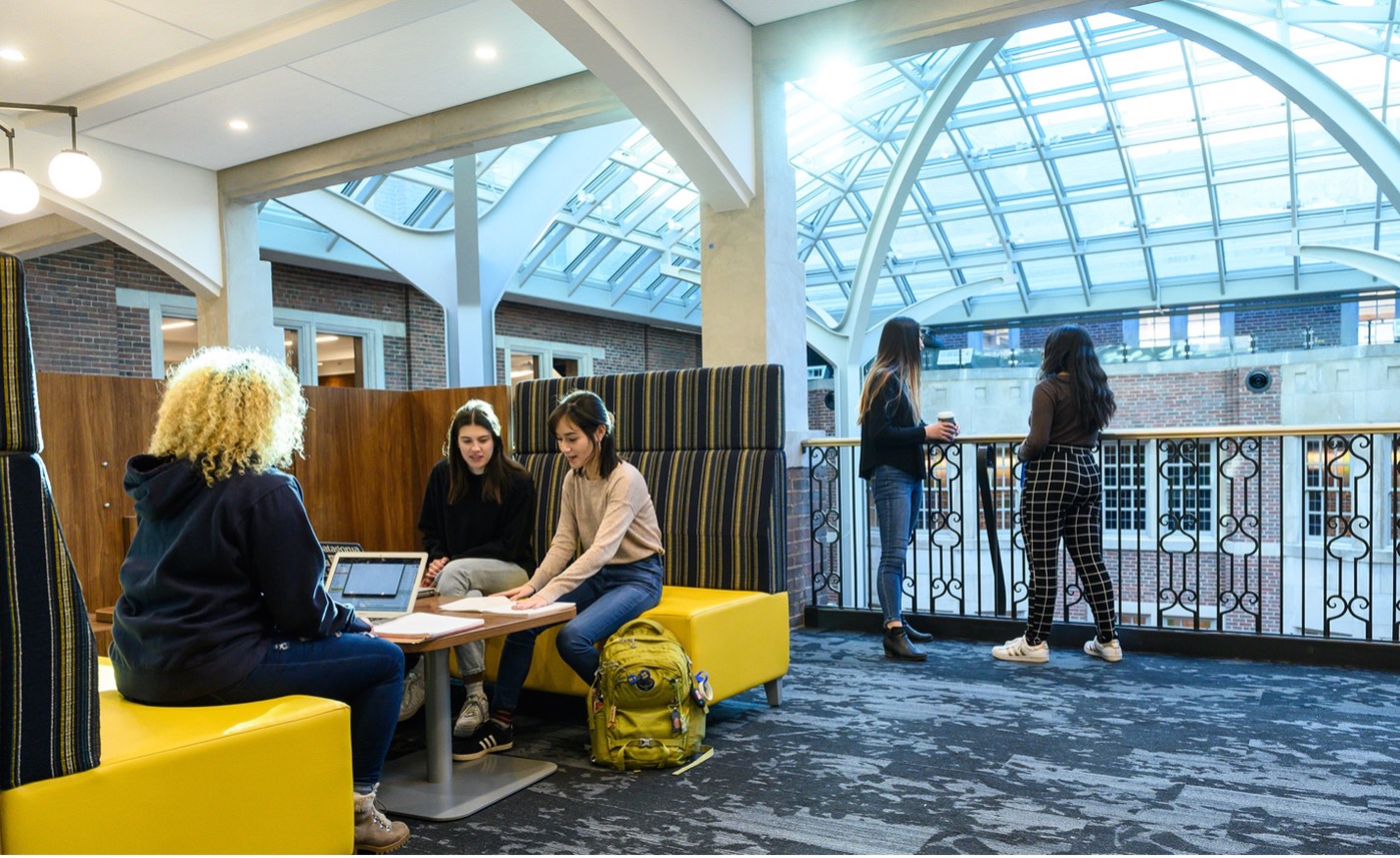
Biophilic Design: The IdeaHub at the University of Michigan includes tree-like columns and a skylit atrium that evokes a forest canopy. These features support well-being and enhance focus, attention, and idea generation.
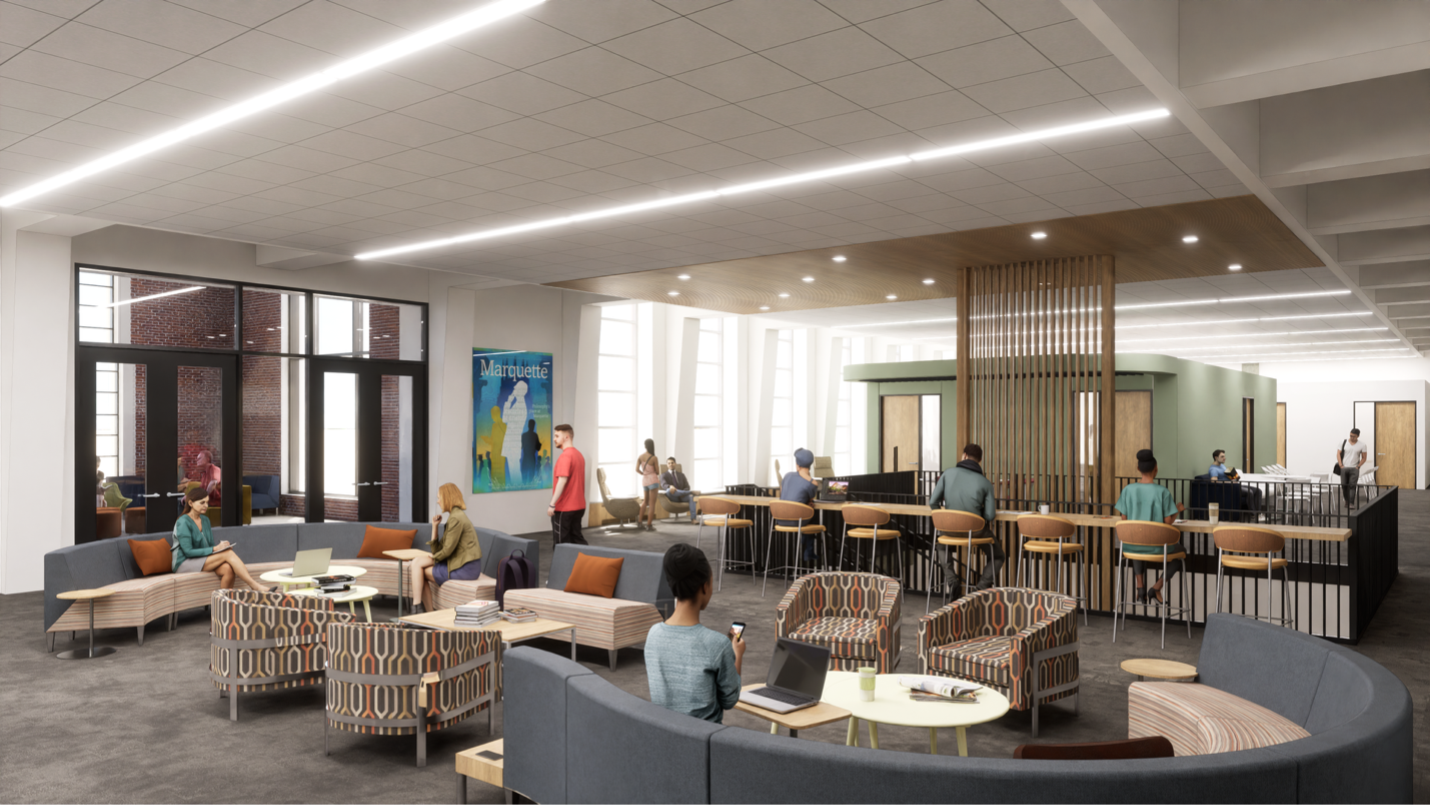
Mix of Gathering Spaces: Marquette University’s Lemonis Center for Student Success offers a dynamic blend of gathering areas, study nooks for focused engagement, and multipurpose rooms that support peer mentoring—all enhanced by a stimulating mix of colors and textures.
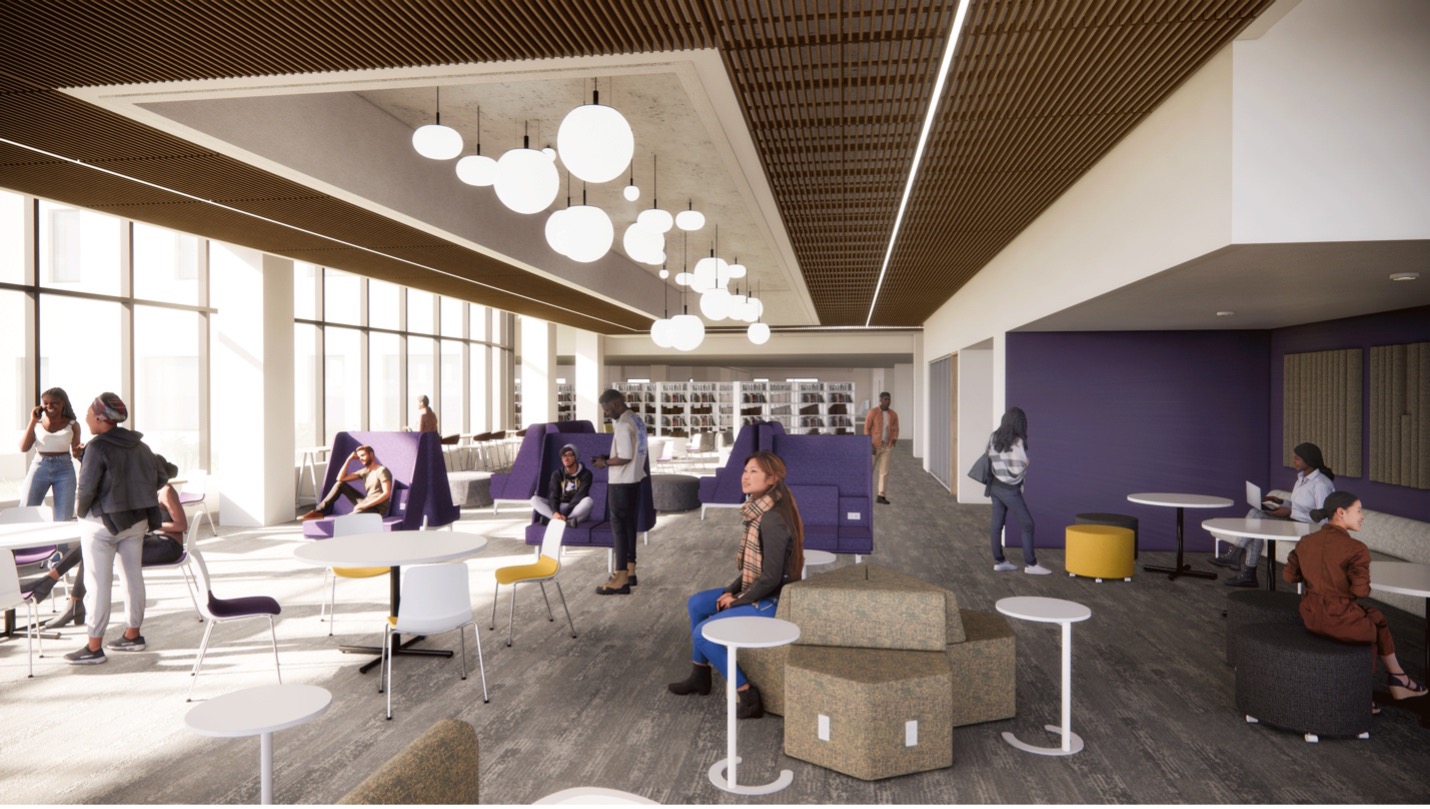
Focus and Collaboration:
UW–Stevens Point’s Learning Resources Center transforms the library into an open, daylit learning commons that supports both individual concentration and creative group work.
Checklist of Supportive Attributes for Creative Campus Environments
Lighting & Visual Comfort
☐ Abundant natural light to reduce fatigue and improve mood
☐ Daylight and exterior views for restoration and inspiration
☐ Balanced lighting systems combining natural and dimmable artificial light
☐ Adjustable task lighting for user comfort and control
Acoustics & Sensory Zoning
☐ Zoned acoustics:
☐ Quiet areas for deep focus
☐ Low-level ambient zones (café-style soundscapes) for ideation
☐ Acoustic separation between collaborative and contemplative zones
☐ Mild ambient soundscapes to support relaxed alertness and flow
Furniture & Layout Flexibility
☐ Movable furniture for spontaneous collaboration and layout reconfiguration
☐ Flexible seating options: lounge chairs, carrels, group seating, posture variety
☐ Adjustable or ergonomic furnishings for long sessions and user comfort
☐ Large horizontal work surfaces for drawing, prototyping, and spreading out
Ideation & Expression Tools
☐ Writable walls, whiteboards, or mobile boards in group rooms, lounges, and studios
☐ Pin-up surfaces for feedback, iteration, and visual collaboration
☐ Display zones for student art, identity, and in-progress work
Biophilia & Material Warmth
☐ Biophilic elements: plants, natural materials, wood, stone, greenery
☐ Views to nature or green space for calm and restoration
☐ Ceilings and columns that mimic natural forms (e.g., forest canopy effect)
☐ Subtle texture and color variation for warmth without overstimulation
User Autonomy & Control
☐ Control over lighting, airflow, and privacy
☐ Spatial variety: nooks, niches, lounges, and open zones
☐ Freedom to choose posture and proximity to others
☐ Mix of social and solitary settings to support different working styles
Social Affordances & Creative Encounters
☐ Nooks and niches for informal dialogue and one-on-one interaction
☐ Transparency and Invitation to encourage discoverability
☐ Open balcony or atrium zones to foster visibility and spontaneous exchange
☐ Circulation paths and thresholds that promote casual collisions
☐ Inviting lounges and commons where people want to linger
☐ Spaces adjacent to student services or dining to encourage serendipitous overlap




201 E Pittsburgh Avenue, Suite 301
Milwaukee, WI 53204
Call us 414.272.8822

Copyright 2022 Workshop Architects, Inc
All Rights Reserved.